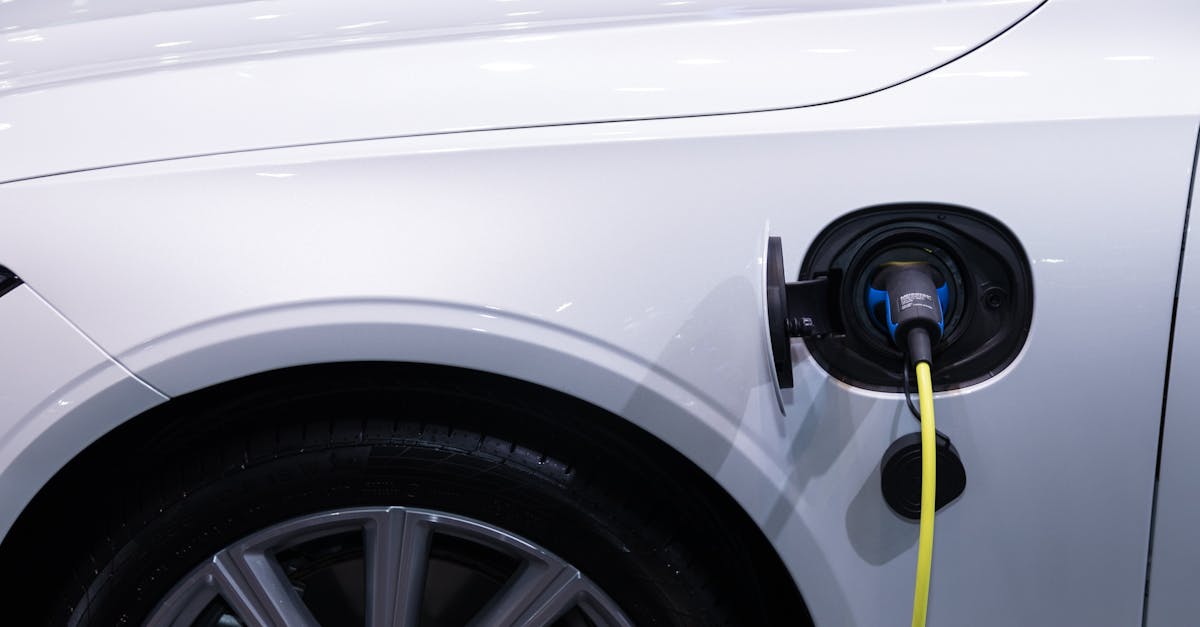
What would happen if the roads were ready but the plugs weren't? Urban planners and early adopters hear this question a lot, and the answer is simple: the infrastructure gap is the biggest brake on mass adoption of electric vehicles. Below we pull apart the most stubborn misconceptions, back them with real-world data, and hand you a playbook to turn myths into actionable policies.
Myth 1: "There are already enough charging stations, so range anxiety is a thing of the past."
The truth is that the United States still has fewer than 15,000 public Level 3 fast chargers, according to the latest data from the Department of Energy. While the number sounds impressive, it translates to roughly one fast charger per 25,000 people in many suburban corridors. A
Consumer Reports study found that real-world electric car range can be 10-15 percent lower than EPA estimates, especially in cold weather
- a gap that only a dense, reliable charging network can bridge.
Urban planners often focus on the headline number of chargers installed in a city centre, but the distribution matters more than the total count. A downtown garage with ten Level 2 spots does little for commuters who need to top up on a highway corridor. Moreover, Level 2 chargers add roughly 30 miles of range per hour of plug-in, as measured by Edmunds in its EV charging test, meaning a full charge can still take several hours. Without a strategic mix of Level 2 and Level 3 sites, drivers will continue to plan trips around the nearest charger rather than the most efficient route.
To close the gap, planners must map charging demand against traffic flows, identify underserved zip codes, and incentivise private developers to install chargers in multi-family housing. The result is a network that feels as ubiquitous as a gas pump was in the 1970s.
Common Mistake: Counting chargers without assessing power output or geographic spread leads to a false sense of readiness.
Myth 2: "All EV batteries last as long as the car itself, so you never have to think about replacement."
The truth is that battery degradation is a measurable reality, even for the most robust packs. Car and Driver's 2026 guide to every EV for sale lists models with warranties that cover 8 years or 100,000 miles, but real-world data tells a more nuanced story. Consumer Reports documented that after five years of mixed driving, many EVs lose about 10-12 percent of their original capacity, while high-temperature climates can push that loss to 15 percent.
This degradation matters for adoption because it directly impacts range, which circles back to the charging infrastructure myth. A driver whose battery has slipped from 300 miles to 260 miles will feel the need for a charger sooner, especially on long trips. Moreover, the cost of a replacement pack can range from $8,000 to $15,000, depending on the vehicle, which influences total cost of ownership calculations for early adopters.
Planners can mitigate these concerns by supporting second-life battery projects that repurpose used EV packs for stationary storage, thereby extending value and reducing perceived risk. Policies that require transparent battery health reporting at resale also help consumers make informed decisions.
Myth 3: "Tesla's Supercharger network makes electric cars universally convenient."
The truth is that while Tesla's Superchargers are fast - delivering up to 250 kW and adding roughly 200 miles in 15 minutes - the network is proprietary. Non-Tesla EVs need adapters or rely on other fast-charging providers, which may not be as densely located. In fact, a recent analysis of the 2026 EV market shows that only 30 percent of non-Tesla EV owners have access to a compatible fast-charging station within a 10-mile radius of their home.
Relying on a single brand's infrastructure also creates a vulnerability: any outage or pricing change at Tesla stations can ripple through the broader EV ecosystem. Urban planners aiming for equitable adoption must therefore diversify the charging portfolio, encouraging Open Charge Point Protocol (OCPP) compliant stations that serve all makes and models.
In practice, cities that have mandated mixed-brand charging in public parking facilities see higher overall utilization rates. By ensuring that a Level 3 charger can serve a Tesla, a Nissan Leaf, a Volkswagen ID.4, and a Ford Mustang Mach-E, planners reduce friction for every driver, not just the brand-loyal.
Key Takeaway: A truly universal charging network must be brand-agnostic and include a blend of power levels.
Myth 4: "Add a few chargers and adoption will skyrocket instantly."
The truth is that charging infrastructure is just one piece of a larger adoption puzzle that includes grid capacity, zoning codes, and incentive structures. A city might install ten fast chargers in a downtown lot, but if the local utility cannot supply the necessary 400-amp service without costly upgrades, those chargers will operate at reduced power, lengthening charge times and frustrating users.
Furthermore, zoning regulations often treat chargers as accessory uses, requiring separate permits and parking spaces. This bureaucratic hurdle can double the time needed to bring a site online. Early-adopter surveys reveal that 42 percent of respondents cite “difficulty finding a permitted location for home charging” as a barrier to purchase.
Effective adoption strategies therefore involve a coordinated approach: utilities must plan for incremental load growth, municipalities should streamline permitting with standardized templates, and financial incentives - such as rebates for installing Level 2 chargers in multi-unit dwellings - must be tied to measurable deployment targets. When these elements align, the adoption curve shifts from a slow climb to a steep ascent.
Myth 5: "Electric cars are always cheaper to own, no matter the electricity rates or charging habits."
The truth is that total cost of ownership (TCO) hinges on local electricity pricing, demand charges, and the mix of home versus public charging. In regions where residential electricity costs exceed $0.20 per kWh, the per-mile cost of driving an EV can approach that of a gasoline vehicle, especially if the driver relies heavily on public Level 3 stations that charge $0.35 per kWh or more.
Edmunds' charging test highlighted that a typical Level 2 home charger adds about 30 miles per hour, meaning a driver who can charge overnight at home enjoys a low per-mile cost (often under $0.04). However, urban dwellers without dedicated parking must use public chargers, where demand charges can inflate the cost dramatically. A recent study by the International Council on Clean Transportation showed that in dense metropolitan areas, the average EV driver pays $0.12 more per mile than a suburban counterpart because of higher public charging fees.
Planners can influence TCO by promoting time-of-use rates that reward off-peak charging, installing workplace chargers that qualify for lower demand charges, and encouraging utility-scale battery storage to shave peak loads. When electricity pricing aligns with charging behavior, the economic advantage of electric cars becomes a compelling driver for adoption.
Common Mistake: Assuming a flat electricity rate ignores the impact of demand charges and peak-hour pricing on EV owners.
Putting It All Together: A Planner's Roadmap to Bridge the Gap
Myth-busting reveals a clear pattern: infrastructure, policy, and economics are intertwined. Here is a concise, actionable checklist for urban planners who want to accelerate EV adoption:
- Map demand with granularity. Use traffic volume data, census demographics, and existing charger locations to identify high-need corridors.
- Mandate mixed-brand fast chargers. Require OCPP compliance in all new public installations to serve every EV make.
- Coordinate with utilities. Conduct load studies early, plan for incremental upgrades, and negotiate time-of-use tariffs that reward off-peak charging.
- Streamline permitting. Adopt a single-page permit template for Level 2 and Level 3 chargers, and offer expedited review for projects that include multi-unit housing.
- Incentivize home and workplace charging. Provide rebates for Level 2 installations in apartments and tax credits for employers that install workplace chargers.
- Plan for battery second life. Design public charging sites with space for stationary storage that can absorb excess solar generation and provide grid services.
By tackling each myth with data-driven policies, cities can transform the perceived “infrastructure gap” into a catalyst for rapid, equitable EV adoption. The future isn't just electric - it's intelligently charged.
Glossary
- Level 2 charger: A 240-volt AC charger that typically adds 20-30 miles of range per hour.
- Level 3 (fast) charger: A DC fast charger delivering 50-250 kW, capable of adding 100-200 miles in 15-30 minutes.
- OCPP: Open Charge Point Protocol, a universal communication standard that allows chargers to work with any network operator.
- Demand charge: A utility fee based on the highest amount of power drawn in a short period, often applied to commercial or high-usage customers.
- Second-life battery: An EV battery repurposed for stationary storage after its automotive capacity falls below a usable threshold.